
Blog Songket Fundamentals
Why Songket Is Considered a Luxury Fabric
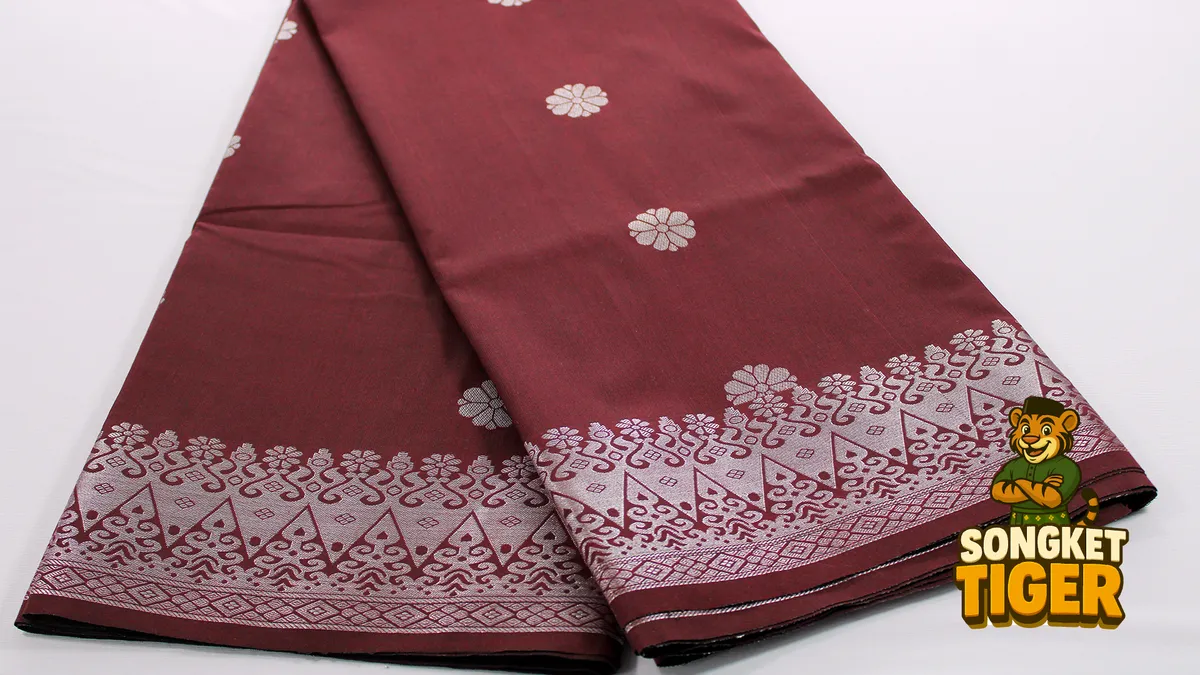
Songket is consistently described as a luxury fabric, and unlike some marketing labels, this one holds up to scrutiny — there are genuine, concrete reasons songket costs more and carries more cultural weight than an average textile.
The Cost of Metallic Thread
Historically, songket used real gold and silver thread, making the raw material cost alone substantial — a direct, literal reason for the fabric’s high value. While most songket today uses metallic-coated synthetic thread rather than precious metal, thread quality still varies significantly, and higher-grade metallic thread that holds its shine and colour longer costs more to produce and use, which is reflected in the final price. See gold vs silver thread songket for more on how thread choice affects a piece.
The Cost of Time
Weaving songket, particularly handmade songket, is genuinely slow work — a single piece can take a skilled weaver days to weeks to complete, depending on pattern density and complexity. That labour time has to be reflected in the price of the finished fabric, in the same way any hand-crafted, time-intensive product commands a premium over something mass-produced quickly.
Density as a Direct Cost Driver
The denser and more continuous a songket pattern — as in full-weave songket — the more metallic thread and weaving time it requires, which directly and predictably raises the cost. This is why full-weave, densely patterned pieces sit consistently at the top of the price range across nearly every songket producer.
A Centuries-Long Association With Royalty
Beyond material and labour cost, songket’s history as a fabric closely tied to royal courts and nobility has given it a lasting cultural premium that outlasts the purely economic argument. Fabrics associated with status for centuries tend to retain that status even once they become more widely accessible — songket is a clear example of that pattern.
Skill Scarcity
Skilled songket weavers — particularly those trained in traditional hand-weaving techniques — represent a genuinely limited and specialized labour pool. As with many traditional crafts, the number of weavers with deep expertise is smaller than mass-market demand, which supports higher prices for pieces from experienced makers, especially in specific regional weaving centres with strong reputations.
Frequently Asked Questions
Has modern production made songket less of a luxury item? Machine-made songket has made the fabric far more accessible at lower price points, but premium handmade and densely patterned pieces remain genuinely luxury items — modern production has widened the market rather than eliminated the top tier.
Is expensive songket always better quality? Generally, price does track real cost drivers (thread quality, weaving time, pattern density, fabric base) rather than being arbitrary — but it’s still worth evaluating a specific piece on its own merits rather than assuming price alone guarantees quality.
Why does songket cost more than batik? Songket’s weaving process is inherently more time- and material-intensive than batik’s dyeing process, which is the core reason for the price gap — see our songket vs batik comparison for the full picture.
Songket’s price tag isn’t arbitrary — it’s the direct result of material cost, labour time, and centuries of cultural association, all pointing in the same direction.