
Blog Songket Fundamentals
Is Songket Handmade or Machine-Made? How to Tell the Difference
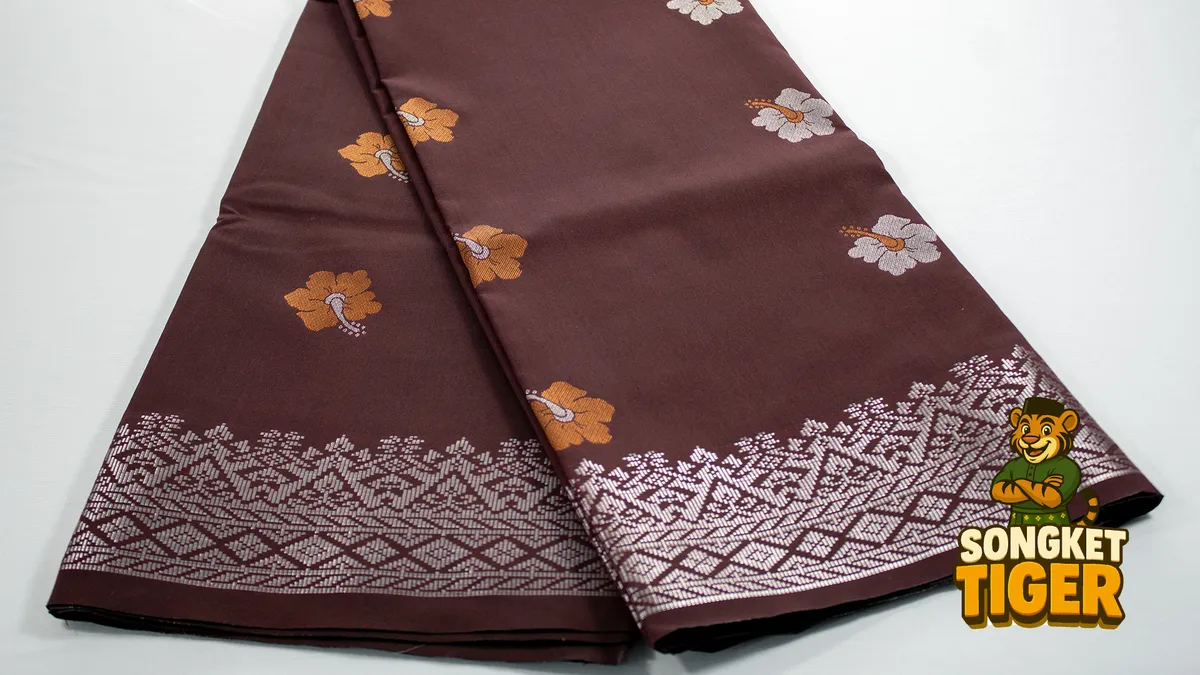
One of the most practical questions buyers ask is whether a piece of songket is handmade or machine-made — and the honest answer today is that both exist, both are genuine woven songket, and neither is a trick or a shortcut. They simply serve different budgets and priorities.
Handmade Songket: Time-Intensive Craftsmanship
Handwoven songket is produced on traditional looms, with the weaver manually picking and inserting each supplementary metallic thread segment by hand, following the pattern design. This process is slow — a single piece can take days to weeks depending on complexity — which is directly reflected in the price. Handmade songket is generally prized for small, individual character variations that come from human craftsmanship, and it remains the traditional standard for the most prestigious ceremonial pieces.
Machine-Made Songket: Consistency at Scale
Machine-woven songket uses mechanical or computerized (often jacquard) looms to produce the same supplementary weft weaving technique at dramatically faster speed and lower cost. This isn’t printed or fake songket — the metallic thread is still genuinely woven into the fabric structure — but the process is automated rather than hand-picked. Machine production makes songket accessible at a much wider range of price points, and it’s what’s made the fabric affordable for everyday formal wear rather than exclusively rare, expensive pieces.
How to Tell Them Apart
A few practical signals can help distinguish handmade from machine-made songket:
- Price is often the clearest indicator — handmade songket typically costs significantly more for a comparable pattern and fabric base, given the labour time involved.
- Small irregularities in motif spacing or thread tension can indicate handwork, while machine-made pieces tend to show highly uniform, precise repetition across the entire fabric.
- Seller disclosure — reputable sellers should clearly state whether a piece is handmade or machine-made; when in doubt, ask directly.
Neither Is “Fake” Songket
It’s worth being clear that machine-made songket is not counterfeit or inauthentic — the defining characteristic of songket is the supplementary weft weaving technique itself, not the tool used to execute it. What genuinely isn’t songket is printed fabric with a gold pattern applied to the surface rather than woven into the structure; that’s a different, much cheaper product entirely, sometimes mistaken for machine-made songket by unfamiliar buyers.
Which Should You Choose?
For once-in-a-lifetime pieces — bridal songket especially — many buyers still prioritize handmade for its craftsmanship and heritage value. For everyday formal wear, gifting, or budget-conscious buying, machine-made songket offers genuine woven quality at a far more accessible price. Both are legitimate options within our Handmade Sampin and machine-made ranges.
Frequently Asked Questions
Is handmade songket always better quality than machine-made? Not automatically — quality depends on craftsmanship and materials in both cases. A well-made machine-woven piece can outperform a poorly executed handmade one, though top-tier handmade pieces generally represent the highest achievable quality.
How much more does handmade songket typically cost? The gap varies widely by pattern complexity and fabric base, but handmade pieces commonly cost several times more than a comparable machine-made design, reflecting the labour time difference.
Can I ask a seller to confirm which type a piece is? Yes — this is standard, reasonable information for a seller to disclose, and worth confirming before buying, especially for a significant purchase like bridal songket.
Both handmade and machine-made songket have a genuine place in the market today — the right choice comes down to your budget, the occasion, and how much you personally value hand craftsmanship over accessibility.