
Blog Songket Fundamentals
Types of Songket: A Guide to the Main Styles and Formats
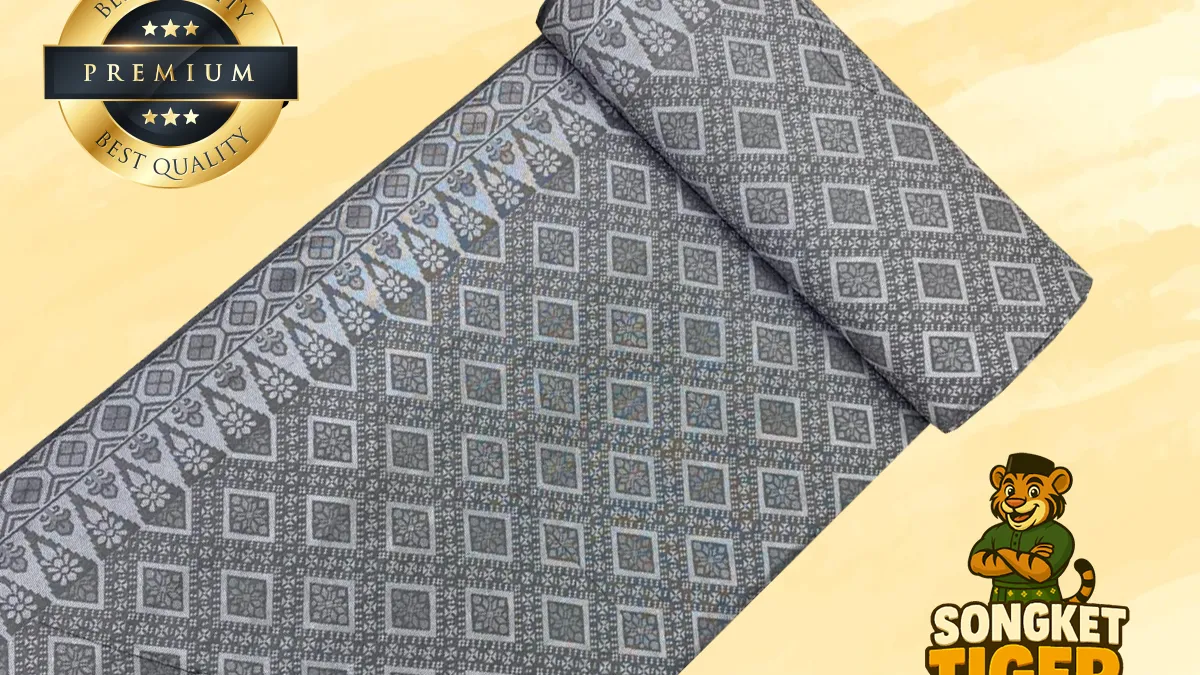
“Songket” covers a much wider range of fabric than most first-time buyers expect. Once you start shopping, you’ll run into terms like songket tenun penuh, kain pasang, and references to traditional versus modern designs — and it helps to know what actually separates them before you buy.
By Weave Coverage: Bordered vs Full-Weave
The most practical distinction is how much of the fabric surface is patterned.
- Bordered songket concentrates the metallic motif work along the edges and end panels of the cloth, leaving the main body plain or lightly patterned. This keeps the fabric lighter, more affordable, and easier to wear for longer periods.
- Songket tenun penuh (full-weave songket) carries the metallic motif across the entire surface of the fabric, edge to edge. It’s denser, heavier, and more visually dramatic — the choice for bridal wear and the most formal occasions. You can browse this style directly in our Songket Tenun Penuh collection.
By Design Era: Traditional vs Modern
Songket also splits along design lines. Traditional songket sticks closely to classical motifs — Bunga Tabur, Pucuk Rebung, and other established patterns passed down through generations of weavers — usually in a fuller, more layered composition. Modern songket reinterprets those same motifs with more open spacing, contemporary colourways, and simplified layouts aimed at younger buyers who still want the heritage fabric but a lighter, more versatile look.
By Fabric Base
The base cloth songket is woven onto also varies — commonly silk, cotton, or cotton/synthetic blends, each with a different feel, drape, and price point. Silk-based songket tends to sit at the top of the price range for its texture and sheen; cotton and blended bases are more breathable and practical for warm climates while still carrying the full metallic weave. We go through this in detail in songket fabric types.
By Product Format: Kain Pasang vs Cut Lengths
Finally, there’s a purely commercial distinction worth knowing: songket is frequently sold as kain pasang — a matched fabric set specifically cut and coordinated to become a particular garment, like baju kurung or baju kebaya — rather than as an undefined length of cloth. This is the format most buyers preparing for a wedding or Hari Raya will actually purchase; see our Kain Pasang Songket Tenun collection for real examples.
Frequently Asked Questions
Which type of songket is best for a wedding? Full-weave songket (songket tenun penuh) is the traditional choice for bridal wear because of its density and visual weight, though many modern brides also choose a heavily bordered piece for comfort during a long ceremony.
Is full-weave songket always more expensive than bordered songket? Generally yes — more metallic thread and weaving time go into a full-weave piece, which is reflected in the price. Fabric base (silk vs cotton) and whether it’s handmade or machine-woven also affect cost significantly; see is songket handmade or machine-made?
Do the motifs differ between traditional and modern songket? The core motif vocabulary is usually shared, but modern songket tends to use fewer motifs per piece, spaced more openly, for a cleaner look. Our songket motifs guide breaks down what each pattern represents.
Once you know which axis you’re choosing along — coverage, era, fabric base, or format — picking between specific pieces becomes a lot more straightforward.