
Blog Songket Fundamentals
The History of Songket: From Royal Courts to Everyday Elegance
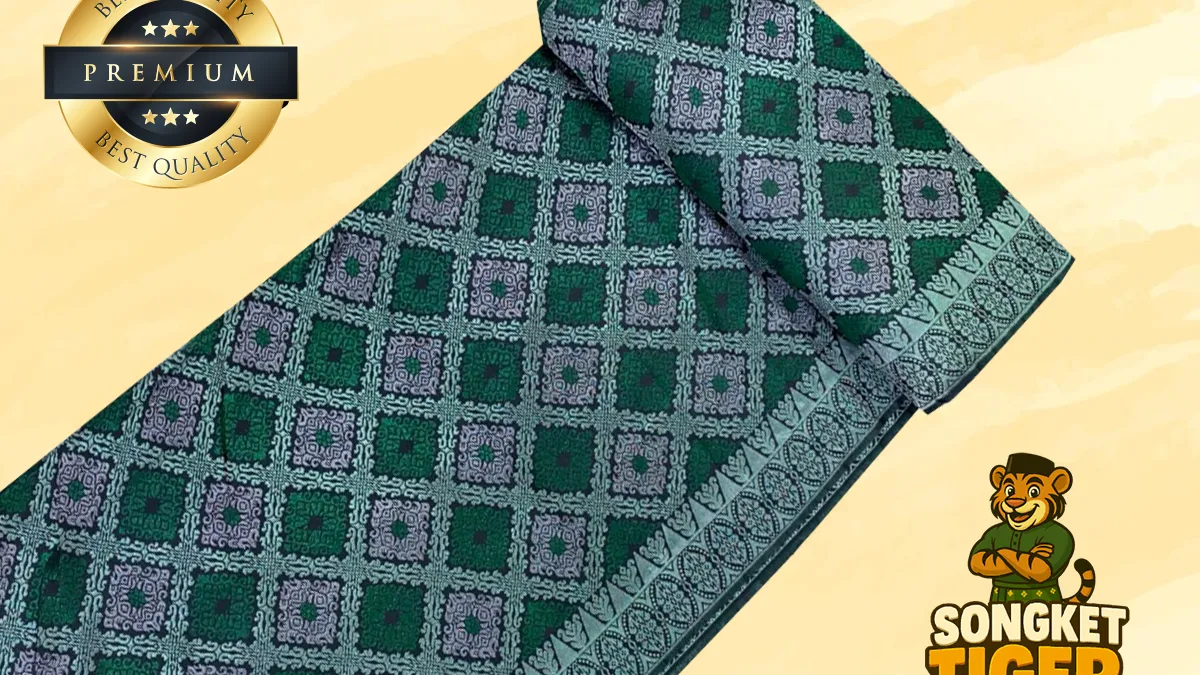
Songket didn’t appear overnight as a wedding fabric — it has a long, layered history shaped by trade, royal patronage, and centuries of weaving refinement across the Malay world. Understanding that history changes how you look at the fabric: what feels like decoration is actually the residue of a very old craft economy.
Early Roots in the Malay World
Most historical accounts trace songket’s development to the historic Malay world of Southeast Asia, with the old trading port city of Palembang in South Sumatra frequently cited as an early center of the craft, tied to the wider trade and cultural networks of the region around the 7th century onward. As with many textile traditions with no single written record, exact dating is difficult, but the consistent thread across accounts is that songket developed where trade brought precious materials — silk and metallic thread — into contact with established local weaving skill. For a deeper look at exactly where and how it may have first taken shape, see our companion piece on the origins of songket.
Trade Brought the Materials That Made It Possible
Songket, as we recognize it, depends on two imported ingredients: silk, and gold or silver thread. Historical trade routes connecting the Malay world with China, India, and the Middle East are widely credited with introducing these materials — Chinese traders are commonly associated with bringing silk, while Indian and Middle Eastern traders are associated with metallic thread techniques. Local weavers combined these imported materials with an already-established weaving tradition to produce something distinct: a fabric that could catch and hold light in a way plain cloth never could.
A Fabric of Rank and Ceremony
For much of its history, songket was closely tied to royalty and the nobility. Because both the raw materials (real gold and silver thread) and the weaving time required were expensive, wearing songket was, in practical terms, a visible marker of status. It appeared at court, at royal ceremonies, and at the weddings of ruling families — a role that still echoes in how central songket remains to Malay weddings today.
From Court Textile to Cultural Heirloom
Over the 20th and 21st centuries, songket gradually moved beyond royal courts into wider public life, without losing its ceremonial character. Today it’s worn far more broadly — but it’s still reserved, more often than not, for occasions that matter: weddings, Hari Raya, engagements, and formal cultural events. That shift is part of why you’ll now see both traditional and modern interpretations of songket sold side by side, aimed at very different generations of buyers who share the same underlying respect for the craft.
Recognition of songket’s cultural value has also grown formally — supplementary weft weaving traditions across Southeast Asia, songket included, have received attention from heritage bodies as an important part of the region’s intangible cultural heritage, reinforcing that this isn’t just a fashion fabric but a documented craft tradition worth preserving.
Frequently Asked Questions
Was songket always made with real gold thread? Historically, yes — genuine gold and silver thread (or gold-wrapped thread) were standard, which is part of why songket was so costly. Most songket today uses metallic-coated synthetic thread, which keeps the visual effect at a far more accessible price. See gold vs silver thread songket for how this works today.
Is songket only a Malaysian fabric? No — songket weaving traditions exist across the wider Malay world, notably in parts of Indonesia and in Brunei as well as Malaysia, each with its own regional character. Our regional songket styles guide covers this in more detail.
Understanding this history is a useful starting point before diving into the specific types of songket available today, since almost every modern variation is, in some way, a continuation of this same court-textile lineage.