
Blog Songket Fundamentals
What is Songket? A Complete Introduction to the Fabric
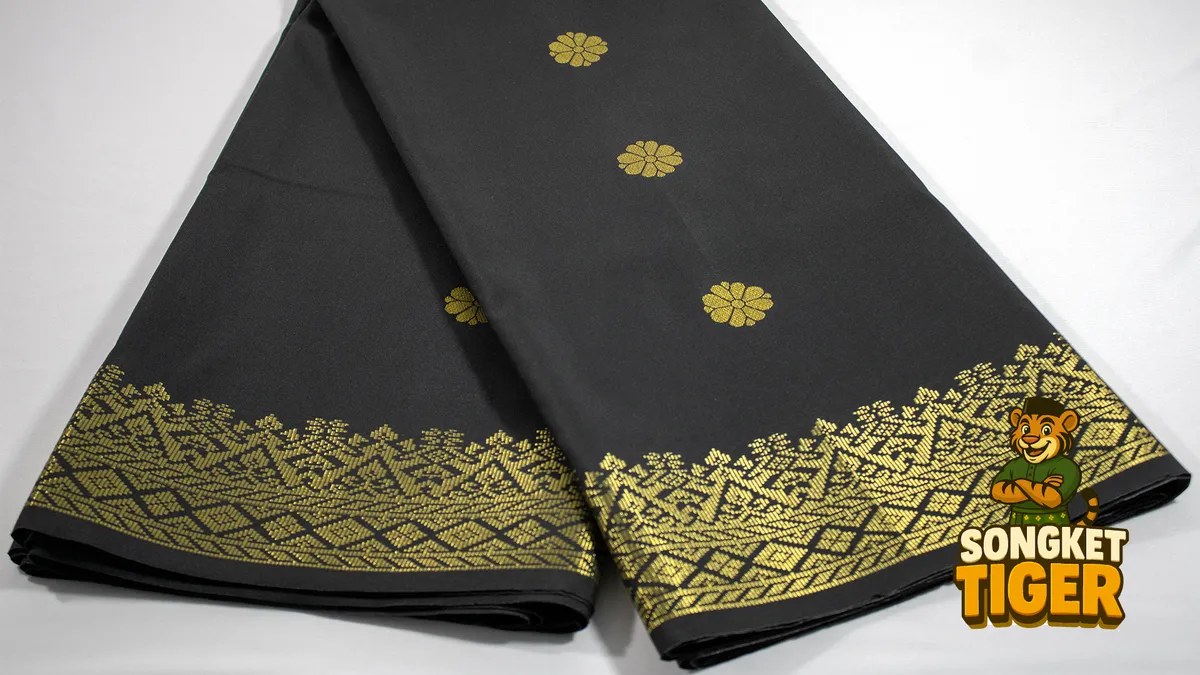
If you’ve ever seen a Malay wedding, a Hari Raya open house, or a formal state ceremony in Malaysia, Indonesia, or Brunei, you’ve almost certainly seen songket. It’s the fabric with the unmistakable shimmer — small, repeating gold or silver motifs woven directly into the surface of the cloth, rather than printed or embroidered on top of it. But what actually is songket, technically speaking, and why does it hold the status it does?
The Short Answer
Songket is a handwoven (or machine-woven, in modern production) fabric built on a base cloth of silk, cotton, or a blend, into which metallic supplementary weft threads — traditionally real gold or silver, today usually a metallic-coated synthetic — are inserted to create raised, glittering patterns. The word songket is generally traced to the Malay root sungkit, meaning “to hook” or “to pick up,” which describes the weaving action: the weaver lifts a small group of warp threads with a pick or a small stick and threads the metallic weft underneath, one motif segment at a time.
This is what separates songket from a printed or embroidered gold-pattern fabric. The design isn’t added after the cloth is made — it’s built into the weave structure itself, which is why genuine songket has a distinct texture you can feel with your fingers, not just see.
Why It’s More Than “Fancy Fabric”
Songket has historically been associated with royalty and nobility across the Malay world, and while it’s far more widely accessible today, it hasn’t lost that ceremonial weight. It’s the fabric people reach for when an occasion calls for formality and respect: weddings, engagements, Hari Raya, official functions, and cultural performances. Understanding the cultural significance of songket helps explain why a fabric can carry that much social meaning in the first place.
Songket isn’t one fixed product, either — it spans a wide range, from densely patterned bridal pieces to lighter, more minimal designs suited to everyday formal wear. If you want a fuller picture of the different weaving traditions and product formats, our guide to the types of songket breaks these down, and our piece on songket motifs covers what the individual patterns actually represent.
How It’s Typically Sold and Worn
Songket is commonly sold as kain pasang — a coordinated fabric set cut and woven specifically to become a garment such as baju kurung, baju kebaya, or baju Melayu — or as a length of songket tenun penuh (full-weave songket), which is patterned across the entire surface rather than just the border. You can see both formats in our Kain Pasang Songket Tenun collection.
Frequently Asked Questions
Is songket the same as batik? No. They’re often mentioned together because both are iconic Southeast Asian textiles, but they’re made completely differently — batik is a wax-resist dyeing technique, while songket is a supplementary-weft weaving technique. See our full songket vs batik comparison.
Where does songket come from? Its exact origins are debated, but it’s strongly associated with the historic Malay world, particularly areas of Sumatra and the Malay Peninsula. We cover this in more depth in origins of songket.
Is all songket handwoven? No — both handwoven and machine-woven songket exist today, at very different price points and production speeds. We explain the difference in is songket handmade or machine-made?
Songket is, at its core, a weaving tradition that turns cloth into something ceremonial. Once you understand how the pattern gets into the fabric, the rest of the tradition — the motifs, the regional styles, the price differences — starts to make a lot more sense.