
Blog Songket Fundamentals
Songket in Indonesia vs Malaysia: Shared Roots, Different Styles
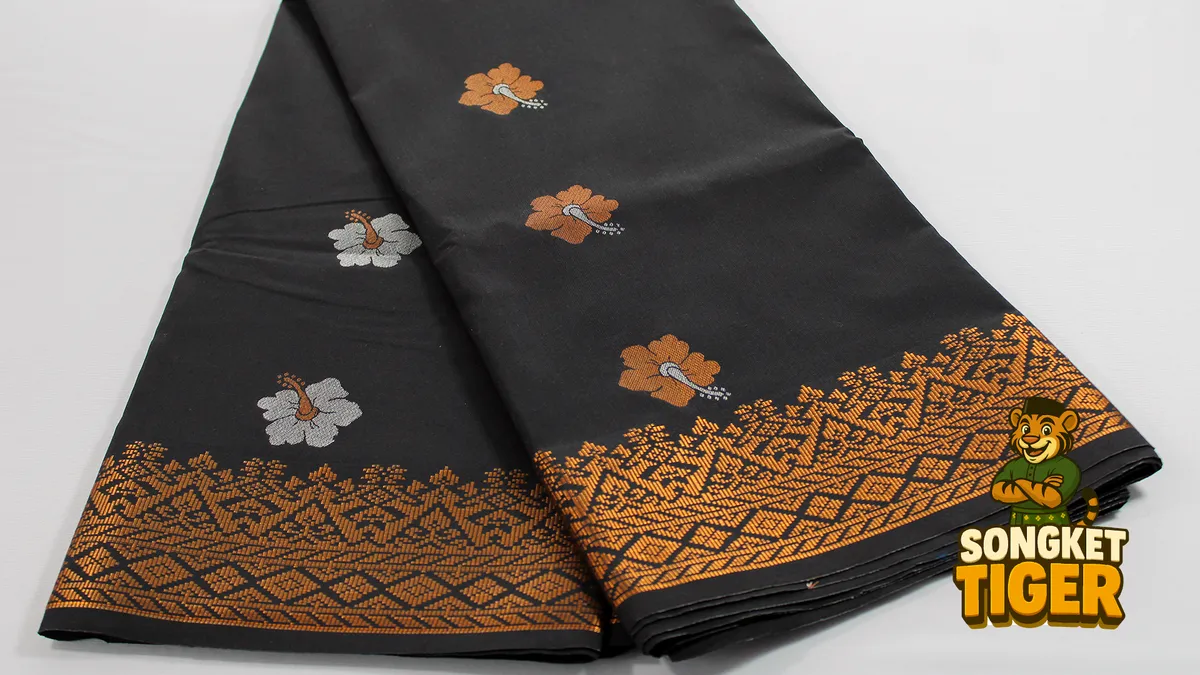
Indonesia and Malaysia both hold genuine, deeply rooted songket weaving traditions, and rather than one being a copy of the other, they’re better understood as parallel branches of a shared regional craft that developed their own regional character over time.
Palembang: Indonesia’s Best-Known Songket Centre
Within Indonesia, Palembang in South Sumatra is the most widely recognized centre of songket weaving, frequently cited in discussions of the craft’s origins given the city’s historic role as a major trade port. Palembang songket has traditionally been closely associated with royalty and remains a source of pride and identity for the region specifically.
Minangkabau and Other Indonesian Traditions
Beyond Palembang, other Indonesian weaving communities — notably Minangkabau weavers in West Sumatra — maintain their own songket traditions with distinct motif preferences, including strong use of shapes like pucuk rebung (bamboo shoot). Indonesia’s songket landscape is genuinely diverse across its many weaving regions, not limited to one style.
Terengganu and Kelantan: Malaysia’s Weaving Heartland
In Malaysia, the tradition is most strongly associated with the east-coast states of Terengganu and Kelantan, covered in more depth in our guide to regional songket styles in Malaysia. Malaysian songket has historically leaned toward dense, richly worked floral and geometric motifs closely tied to the region’s own royal court history.
Points of Genuine Overlap
Despite developing distinct regional identities, Indonesian and Malaysian songket share a great deal — the same core supplementary weft weaving technique, many of the same foundational motifs, and a similarly close historical association with royalty and ceremonial dress. Neither country’s tradition is “more authentic” than the other; they’re both legitimate continuations of the same broader Malay-world weaving heritage discussed in our history of songket.
Points of Genuine Difference
Where the two traditions diverge is mostly in specific stylistic tendencies — colour preferences, motif emphasis, and, in Palembang’s case, a strong association with pure silk bases. These differences are real and worth knowing, but they shouldn’t be overstated into a stricter divide than actually exists between two closely related craft traditions.
Frequently Asked Questions
Is songket originally from Indonesia or Malaysia? Historically, the tradition developed across a connected Malay world that predates modern national borders — both countries have equally legitimate, deep-rooted claims to the craft.
Can you tell Indonesian and Malaysian songket apart by looking at them? Experienced buyers can often spot regional tendencies in motif style and colour, but there’s meaningful overlap, and not every piece cleanly signals one country over the other.
Is one country’s songket considered higher quality? No — quality depends on the individual weaver’s skill and materials used, not national origin. Both countries have highly skilled weaving communities and workshops producing excellent songket.
Rather than picking a side, the more useful takeaway is that Indonesia and Malaysia represent two rich, living continuations of the same textile tradition — each worth understanding on its own terms.