
Blog Songket Fundamentals
Songket vs Tenun: How Are They Related, and How Are They Different?
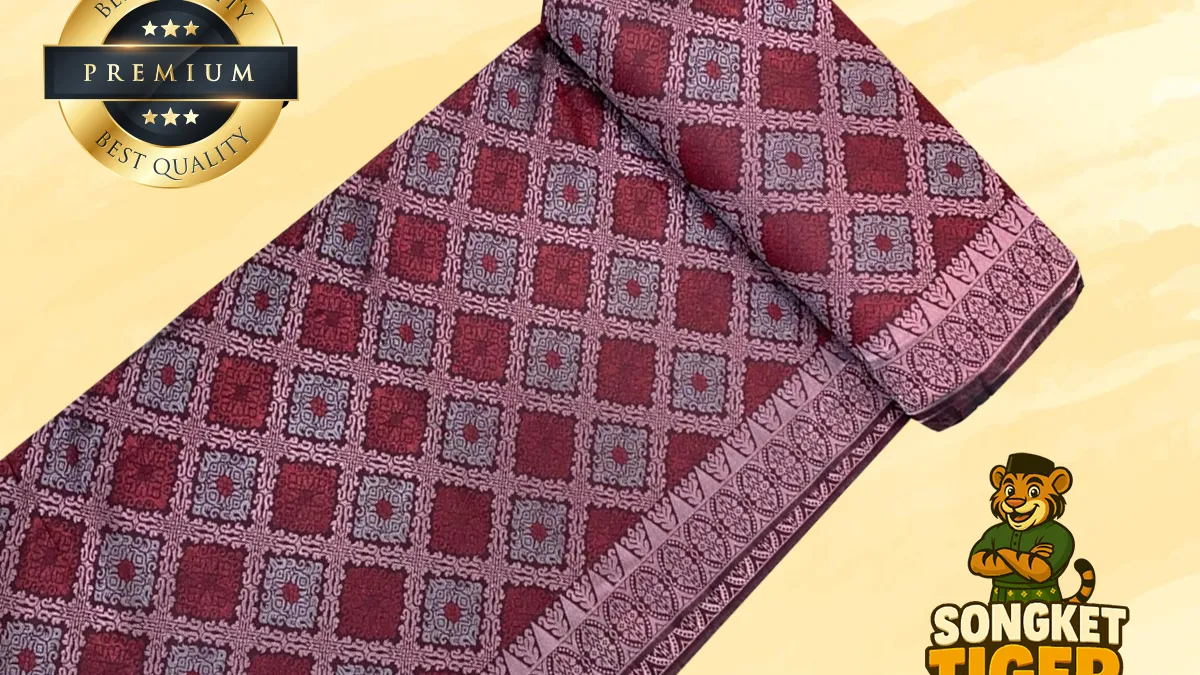
If you’ve browsed songket product listings, you’ve probably noticed the word tenun attached to a lot of them — “songket tenun penuh,” “kain pasang songket tenun.” This isn’t a separate competing fabric; it’s a description that clarifies what songket actually is at a technical level.
Tenun Simply Means “Woven”
Tenun is the Malay word for “weaving” or “woven.” On its own, it’s a general term that can describe any woven textile — it doesn’t specify a particular pattern, thread type, or technique. So when you see “songket tenun,” it’s not describing two different fabrics combined; it’s specifying that this is woven songket (as opposed to, say, embroidered or printed gold-pattern fabric), and often more specifically the weaving method used to create it.
Songket Is a Type of Tenun, Not a Separate Category
Think of it this way: tenun is the broad category (woven textiles), and songket is a specific, highly decorated technique within that category — distinguished by its use of supplementary metallic weft thread to create raised motifs. All songket is tenun (it’s woven), but not all tenun is songket (plenty of woven fabric has no metallic thread pattern at all). For the full technical explanation of what makes songket specifically songket, see what is songket?
Why “Tenun” Appears So Often in Product Names
In product naming, “tenun” is often used to reassure buyers that a piece is genuinely woven rather than a cheaper printed imitation of the songket look. Because printed gold-pattern fabric exists at a much lower price point and can superficially resemble songket in a photo, sellers who specifically weave their metallic patterns will often emphasize “tenun” in the name to signal authenticity. This is closely tied to the question of is songket handmade or machine-made? — both handmade and machine-woven songket are genuinely tenun (woven); it’s printed fabric imitating the look that isn’t.
Songket Tenun Penuh: A Specific, Common Term
You’ll frequently see the phrase songket tenun penuh, meaning “full-weave songket” — songket where the metallic motif covers the entire surface of the fabric rather than being concentrated at the borders. This is one of the types of songket we cover in more depth elsewhere, and it’s generally the most formal and most expensive format, reserved for bridal wear and top-tier ceremonial dress. You can see this format directly in our Songket Tenun Penuh collection.
Frequently Asked Questions
Is “tenun” and “songket” the same thing? No — tenun is the general term for weaving/woven fabric, while songket is a specific decorated weaving technique. Songket is always tenun, but tenun isn’t always songket.
Does “tenun” in a product name guarantee it’s handwoven? Not necessarily — “tenun” confirms the fabric is genuinely woven (as opposed to printed), but both hand looms and machine looms produce woven fabric, so “tenun” alone doesn’t tell you which. Check the listing for “handmade” or “machine-made” specifically.
Why do some songket listings say “tenun” and others don’t? It largely comes down to seller convention and emphasis — dropping “tenun” from a name doesn’t mean the fabric isn’t woven, it’s usually just a shorter product name for a fabric that’s understood to be woven by default.
Once you know that tenun just means “woven,” the terminology around songket stops feeling like a maze of separate product types and starts making a lot more sense as one consistent vocabulary.